Fantasy and sci-fi as narrative methods, not just settings: It's not a matter of swords vs. spaceships
Or, on sci-fi as a cousin genre to detective fiction and essay, & fantasy as a cousin to horror and poetry
George Lucas has once claimed that Star Wars is not sci-fi at all, but fantasy. Like him, I dislike expressions like “space opera”; the fact that Star Wars is set in space is incidental, it’s simply fantasy, as much as Gideon the Ninth and other fantasy works set in space. Likewise, J.K. Rowling has denied that Harry Potter is fantasy. As a lifelong fantasy fan and also someone with an aversion to Harry Potter since long before the author came out as a TERF, I agree with her wholeheartedly.
I see sci-fi and fantasy as flavour profiles, as types of cuisine; as types of storytelling that emerged in their respective settings. The fact that I’m much more interested in (lesbian) fantasy than (lesbian) sci-fi has nothing to do with preferring elves to aliens (the only setting preference I apply consistently are the lesbians). It's perfectly possible to write sci-fi about knights and fantasy about laser guns, or about any other setting.
Sci-fi and detective: The joy of learning
Science fiction is about making sense of the world through human reason, investigation, and grit. It's about putting things together; about classifying and analysing and summarising. The prototypical sci-fi hero deals with the conflict by their inventiveness.
That's why sci-fi reads like detective novels—or like essays. The main distinction between the two genres is that in detective fiction the hero is applying human ingenuity to unravel one evil thing (a criminal, or a criminal act)—an antagonist, standing in opposition to the investigator, baffling them; puzzling them. Whereas in sci-fi the hero tries to make sense of the world, generally. Like a, uh, like a scientist.
To continue on how Star Wars is fantasy not sci-fi, consider Star Trek. The series as well as their sequels and expansions are very much textbook sci-fi, but not for the reasons that people often give: not for the space exploration, or the physics, which is pretty much set dressing, mumbo-jumbo technobabble. The “sci” it is a “fi” of is sociology. Star Trek presents you with a number of different social structures—American entrepreneurial sex-tourist adventurers; imaginary Soviet Communists; abstract barbaric Roman empires; autistic people; a distillation of the imagination of Gengis Khan; this and that philosophical experiments, e.g. pure hedonists, pure utilitarianists, literal Dr. Moriarty etc.; then it locks them all together in a laboratory environment (a spaceship, or a planet), in order to run an experiment: Can we all get along? Why or why not? And then it investigates that question, with the same thoroughness of Agatha Christie investigating a crime scene.
A good example of this at a more narrative level, and one of my favourite sci-fi novels, is Embassytown by China Miéville. The narrator constantly throws at you stuff like “Susan was a simile” or “The new Ambassador stepped forward: one of the two men was tall, the other stocky”. You read that you're like, huh, what the hell. What does that mean?? Then you it keep reading and it all makes sense. The pieces fall into reasonability like inflections in a morphological table when you see the pattern. (It should be obvious why I like Embassytown; if Star Trek is sci-fi of sociology, Embassytown is sci-fi of linguistics; it asks the question, “what if language was actually a tool for communication, like laypeople think it is, what would that look like?” and then investigates that question.)
Fantasy and horror: The thrill of breaching the veil
Fantasy, by contrast is about what lies beyond the realms of human apprehension. While the sci-fi protagonist faces the conflict through reason and inventiveness, the fantasy hero stands before the numinous Itself, and one can only face that by letting go of all attempt at understanding; through body and Providence, through animal and angel, muscle and mystery intuition; through surrender. Frodo at Mt. Doom. Dænerys stepping into the fire. Sword & Sworcery’s hero, the Scythian: Believe.
This is why fantasy is so close to horror, and why both blend and bleed over so frequently. The main distinction between them is that fantasy focuses on the “awe” of the uncognoscible, while horror focuses on the “fear” of It. As the word “awful” reminds us, the two are so closely connected that sometimes they are indistinguishable. Maybe the most quintessential horror story of the most quintessential horror writer is Lovecraft's The Shadow Over Innsmouth, yet the closing lines read more like fantasy than horror:
…The tense extremes of horror are lessening, and I feel queerly drawn toward the unknown sea-deeps instead of fearing them. I hear and do strange things in sleep, and awake with a kind of exaltation instead of terror. I do not believe I need to wait for the full change as most have waited. If I did, my father would probably shut me up in a sanitarium as my poor little cousin is shut up. Stupendous and unheard-of splendours await me below, and I shall seek them soon. Iä-R’lyeh! Cthulhu fhtagn! Iä! Iä! No, I shall not shoot myself—I cannot be made to shoot myself! I shall plan my cousin’s escape from that Canton madhouse, and together we shall go to marvel-shadowed Innsmouth. We shall swim out to that brooding reef in the sea and dive down through black abysses to Cyclopean and many-columned Y’ha-nthlei, and in that lair of the Deep Ones we shall dwell amidst wonder and glory for ever.
The moment you try to explain this you explain it away, it vanishes, like faerie-gold in the morning light. That’s what Harry Potter does, in debasing magic into mundanity; the magic of HP is a thing of newspapers and sports and commercialised doodads; it’s distinctly not magical. “Any sufficiently advanced technology is indistinguishable from magic” is a saying that could only ever be born in the mind of a sci-fi writer; Harry Potter magic doesn’t feel magical precisely because it’s been reduced to nothing but sufficiently advanced technology.
Fantasy is averse to rules, tables, systems of all kinds. If you do X-men–like catalogues of supernatural powers they lose the narrative impact (like e.g. the duel between Gandalf and Saruman in the movie adaptation vs. the original book). What is the list of powers of the One Ring? we don't know. That's the point. It makes people invisible, yes, but as a side-effect; their very bodies are drawn into the numinous, beyond the veil alongside wraiths and horrors. The Ring irresistibly seduces people into being rulers, but how exactly? Do others follow the Wielder of the Ring as if brainwashed, or are they subtly manipulated, or do they bend their knee out of their own accord because you're so powerful that legions are attracted to that? Powerful how? To try to put it in words is to miss the point. What kinds of “spells” exactly can Gandalf do? Wrong question to ask of a miracle.
Fantasy as a cousin to song
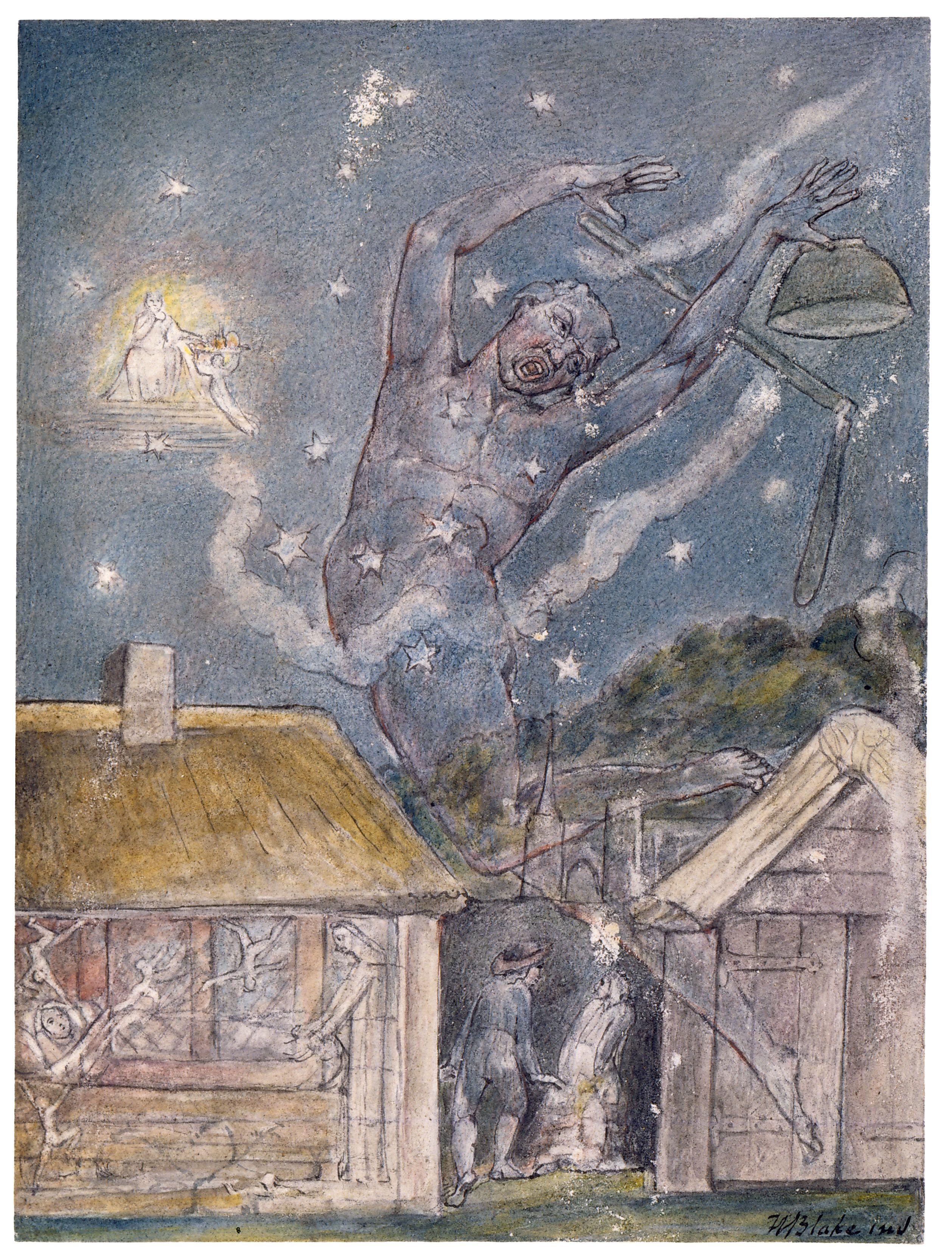
In Unweaving the Rainbow, materialist polemicist Richard Dawkins tries to cope with the fact that his favourite poets, Blake and Yeats, are hostile to Dawkins' sensibilities:
Do not all charms fly At the mere touch of cold philosophy? There was an awful rainbow once in heaven: We know her woof, her texture; she is given In the dull catalogue of common things. Philosophy will clip an Angel's wings. Conquer all mysteries by rule and line. Empty the haunted air, and gnomed mine— Unweave a rainbow, as it erewhile made The tender-person’d Lamia melt into a shade.
After a long exposition on all the hidden beauties of rainbows as revealed by the analytical efforts of science, Dawkins proposes his main thesis:
Mysteries do not lose their poetry when solved. Quite the contrary; the solution often turns out more beautiful than the puzzle and, in any case, when you have solved one mystery you uncover others, perhaps to inspire greater poetry. […] I shall here limit myself to the untestable speculation that Keats, like Yeats, might have been an even better poet if he had gone to science for some of his inspiration.
Yet his side of things has proven remarkably unable to develop poetry, the true poetry burning in the hearts of things. He has to resort to mystics. Trying to reclaim the fire of a Blake (a poet who, like me, saw the angels up in the trees as a child), he eventually has to kinda give up:
It is not, of course, that science should be declaimed in verse […] Simple, sober clarity will do nicely, letting the facts and the ideas speak for themselves. The poetry is in the science.
…Which reminds me of the kind of person who says that writing aesthetically functional computer code is a type of poetry. The great mystical poets would surely be even better if they were more like me, Richard Dawkins.
Because fantasy lies not in the showing or the learning but in the body-feel, in the evoking, it is naturally close to poetry, to song; even for literature standards, the choice of words matter especially strongly in the case of fantasy—not just for clarity of storytelling but for texture, for musicality.
The best fantasy is written in the language of dreams. It is alive as dreams are alive, more real than real ... for a moment at least ... that long magic moment before we wake.
Fantasy is silver and scarlet, indigo and azure, obsidian veined with gold and lapis lazuli. Reality is plywood and plastic, done up in mud brown and olive drab. Fantasy tastes of habaneros and honey, cinnamon and cloves, rare red meat and wines as sweet as summer. Reality is beans and tofu, and ashes at the end. Reality is the strip malls of Burbank, the smokestacks of Cleveland, a parking garage in Newark. Fantasy is the towers of Minas Tirith, the ancient stones of Gormenghast, the halls of Camelot. Fantasy flies on the wings of Icarus, reality on Southwest Airlines. Why do our dreams become so much smaller when they finally come true?
We read fantasy to find the colours again, I think. To taste strong spices and hear the songs the sirens sang. There is something old and true in fantasy that speaks to something deep within us, to the child who dreamt that one day he would hunt the forests of the night, and feast beneath the hollow hills, and find a love to last forever somewhere south of Oz and north of Shangri-La.
(George R. R. Martin, in: The Faces of Fantasy, 1996.)
It’s not just that brown and olive aren’t enough, but it’s that it’s not even enough to say it’s blue, yellow and red; it has to be vermilion, gold, indigo. Fantasy writing is the same type of activity as writing poetry, only it’s done in the looser form it takes in the stories told by children, by forgotten folktales, by lunatics and hallucinating mystics; it is a thing of hair-rising unexplainable shadows, of intoxicated dances in the moonlight. So is horror. That’s why for both Tolkien and Lovecraft, the choice of vocabulary is so consequential; the same story told with different words, e.g. a Tolkien with more Latinate and non-Germano-Celtic words, with “potatoes” and “tobacco” for “taters” and “pipeweed”, would plainly not work.