Or, on sci-fi as a cousin genre to detective fiction and essay, & fantasy as a cousin to horror and poetry
George Lucas has once claimed that Star Wars is not sci-fi at all, but fantasy. Like him, I dislike expressions like “space opera”; the fact that Star Wars is set in space is incidental, it’s simply fantasy, as much as Gideon the Ninth and other fantasy works set in space. Likewise, J.K. Rowling has denied that Harry Potter is fantasy. As a lifelong fantasy fan and also someone with an aversion to Harry Potter since long before the author came out as a TERF, I agree with her wholeheartedly.
I see sci-fi and fantasy as flavour profiles, as types of cuisine; as types of storytelling that emerged in their respective settings. The fact that I’m much more interested in (lesbian) fantasy than (lesbian) sci-fi has nothing to do with preferring elves to aliens (the only setting preference I apply consistently are the lesbians). It's perfectly possible to write sci-fi about knights and fantasy about laser guns, or about any other setting.
It's generally hard for a Japanese porn performer to be allowed to transition into mainstream TV, but there seems to be a bit of a tradition of AV actresses being cast as femme fatales in tokusatsu, of all things:
I still plan to write more on my series about early videogame lesbians, but today I want to highlight this enemy character from the Castlevania series who, like many early trans characters, started her existence as an unfunny bigoted joke, but then transcended the meanness by the sheer presence and glory of her gender. I'm talking about the Icy Chick, the Evil Ghost who Transitioned, the Snow Fairy herself: Frozen Half, from Castlevania: Symphony of the Night.
The description reads: “An evil New Half spirit who wields power over ice. A minion of Galamoth.”
It's finally happened. Enough time has passed, enough other scenes have come and gone in the meantime, that I can be legitimately nostalgic for vaporwave. Not like,
aesuthetikku ironic nostalgic, but just baseline regular nostalgic for the (sunset) golden days of the nostalgia-est of nostalgia genres.
Todo ser aprenderá / a ter as estrelas como guia…
Though I'm sure somewhere out there there's young folk born too late to have caught anything to do with vaporwave, and who now feel nostalgia for the early vapor scene while having never been there. This thought makes me happy.
Feel free to spray-paint these on cop cars, embroider them on the backs of tokkōtai uniforms of your all-girl biker gangs, etc.
Notice that reading 法 as “fa” and interpreting it as “fascism” is non-standard, and a borrowing from Mandarin. I think it works well with the meaning of 法 too, but if you're using those slogans you'll need furigana. If you want clarity you might want to just replace the kanji by katakana ファ (反ファ = hanfa is already established, or maybe gloss the entire 反法 as アンティファ). I'm not very satisfied with any of these solutions, but most of the others I think work well. 也 in a yojijukugo is nonstandard, as is the go'on reading “e”, but I couldn't resist the direct parallel with Kurmancî.
反法警報 hanfa-keihō, Alerta antifascista
全警凶人 zenkei-kyōjin, All cops are bastards
全警標的 zenkei-mokuhyō, All cops are targets
恋同行罪 rendō-kōzai, Be gay do crimes
抗戦命也 kōsen-mei'e, Berwxedan jîyan e
夜友暗抱 yayū-anpō, Die Nacht ist unsere Freundin und ihre Finsternis umarmt uns
民合無敵 mingō-muteki, El pueblo unido jamás será vencido
反法雁行 hanfa-gankō, Faşizme karşı omuz omuza
放火全獄 hōka-zengoku, Feuer und Flamme allen Knästen
戦女生女 senjo-seijo, Frauen, die kämpfen, sind Frauen, die leben
妄動必覚 bōdō-hikkaku, Fuck around and find out
女命自由 jo-mei-jiyū, Jin jiyan azadî
無境無国 mukyō-mukoku, No border no nation
不義不平 fugi-fuhei, No justice, no peace
突破絶不 toppa-zeppu, No pasarán
無君無臣 mukun-mushin, No servants no masters (*actually present in Chinese anarchist Bào Jìngyán in the 3rd century!)
単答革命 tantō-kakumei, One solution: revolution
衆全我無 shūzen-gamu, Para todos todo, para nosotros nada
和舎争堂 washa-sōdō, Peace to the huts, war to the palaces
To circumvent the various restrictions of musescore dot com (e.g. transpose without logging in), you can also download the Musescore file here . (If I forget to update this version in the future, ping me on mirrorwitch (at) transmom (dot) love .)
Lately I've been looking into African rhythm (Western or generally Sub-Saharan). Because after understanding the basics of how melody and harmony works, I want to get a better feeling for rhythm.
Japanese flute music is very comfy for me because the rhythm is free and intuitive and nature-sound-like, but at some point I want to be able to do things like playing modern music at a nice pace or just accompanying wadaiko in festivals. and my problem with that is that I hate metronomes. Really fucking hate metronomes. Can't stand the damn things. (I wonder how European Common Practice musicians trained rhythm before the invention of metronomes.)
It's not the clacking that bothers me, it's the deadness of fitting into a grid. This schoolroom feeling of it, this dictatorshipness (but I repeat myself). Even though rhythm is fitting into a grid? But it feels so different when it's someone playing the drums. I considered using the library's Volca Bass, or borrowing their Stylophone Drums, to have something more interesting than a clack, but in the end a drum backing track on youtube is much better for me, though still I feel like I'm missing something. I'm not sure I can explain it well.
When I tried once to explain briefly to a friend what it was all about, I found that with the exercise of severe economy I took 41 pages and 10,000 words.
(J.R.R. Tolkien) #relatabel#justlikeme#frfr
I think most people haven't browsed the History of Middle-Earth and thus don't know how much Tolkien struggled with executive dysfunction and how much of his work is unfinished. HoME is 12 volumes of unfinished, unedited, often contradictory material; it's not a “history of Middle-Earth” as in, a narrative of events in the realms of Arda, it's a “history of Middle-Earth” as in, I, Christopher Tolkien, will show the boxes and boxes of Middle-Earth manuscripts that my father started and never completed; it's a history of the work we call Middle-Earth, a history of revisions. And that's still not all of it! Most of the stuff that interests me was to be slowly published even later, in the periodicals Vinyar Tengwar and Parma Eldalamberon, and occasionally in books like The Nature of Middle-Earth (2021). It's still not all published, by the way. Christopher and the Tolkien Estate editors involved with this describe it more to the note of “scratched the surface” or “tip of the iceberg”. Yes, this is the most famous name in fantasy and most of his material remains unpublished.
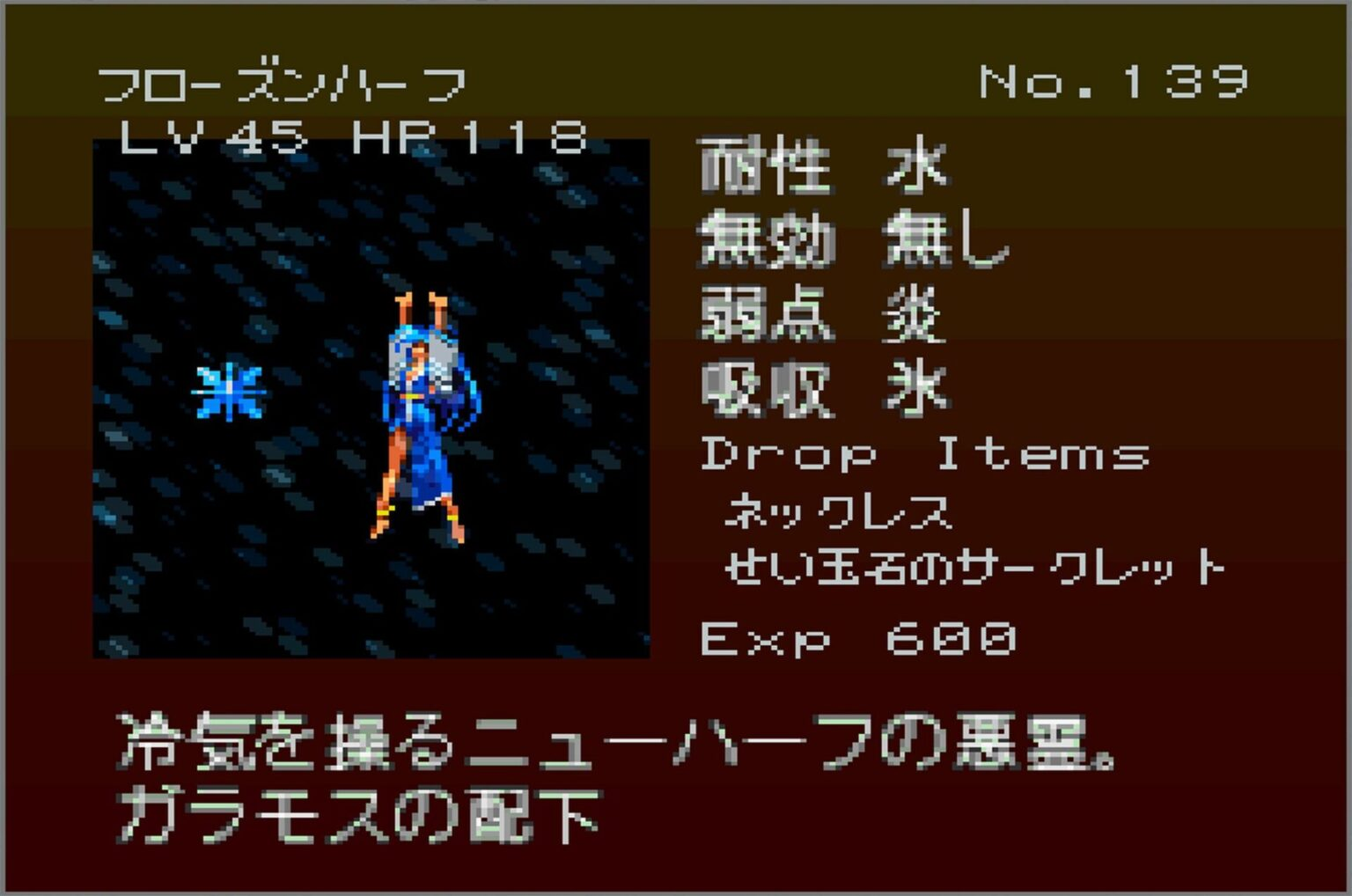 The description reads: “An evil New Half spirit who wields power over ice. A minion of Galamoth.”
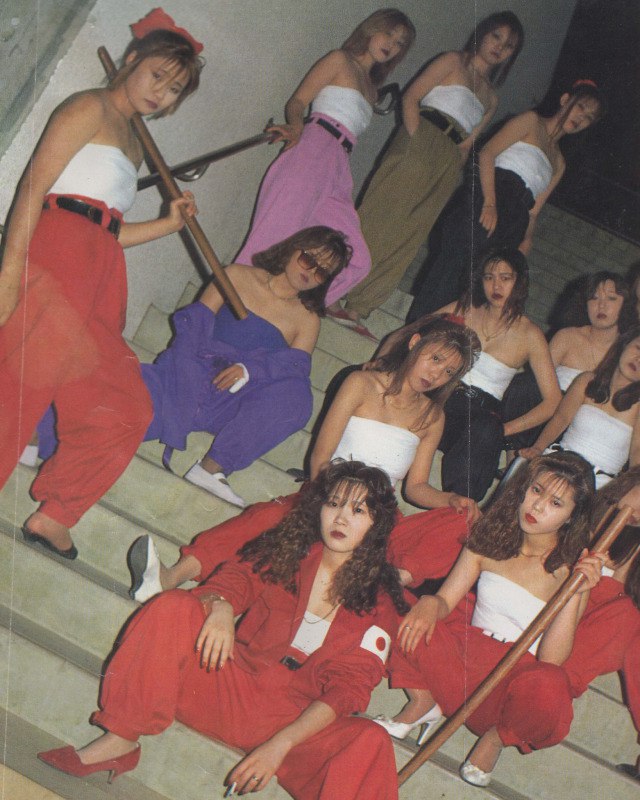 An all-female bōsōzoku gang posing in matching outfits for a “Teens Road” reportage, 1995.